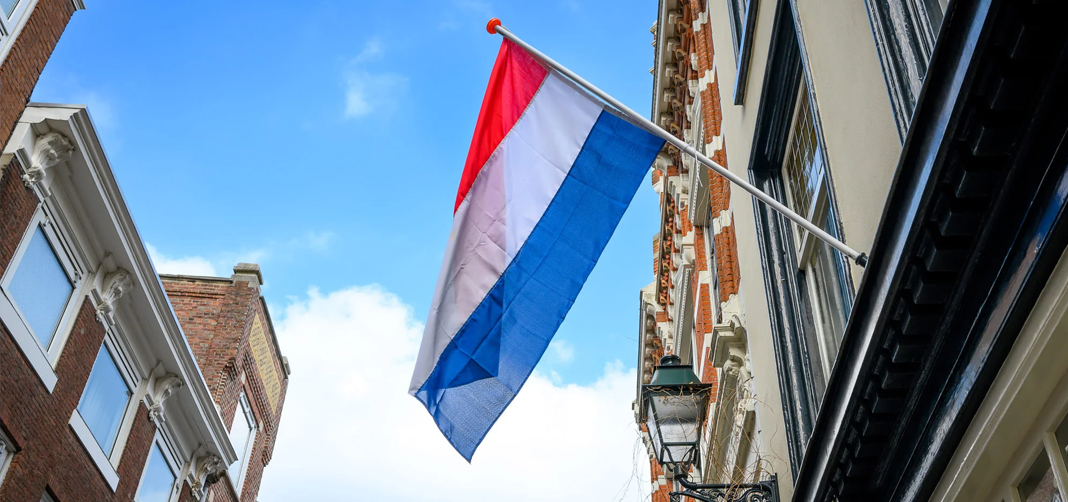
The Netherlands is one of Europe’s most internationally connected economies. Its strong technology, engineering, logistics, life-sciences, agriculture, finance, energy and creative sectors attract qualified professionals from around the world. English is widely used in many international workplaces, cities are well connected, and Dutch employment law provides a structured environment for employers and workers. For an Indian or other non-European professional, however, a promising vacancy is only the beginning. The correct work and residence permission must be identified before employment starts.
A Netherlands Work Visa is the popular name for the immigration permission that allows a non-EU, non-EEA or non-Swiss national to live and work in the Netherlands. It is not one universal visa. Depending on the employee, employer, salary, education and nature of the assignment, the appropriate route may be a highly skilled migrant residence permit, a single permit for residence and work known as a GVVA, a European Blue Card, an intra-corporate transfer permit, an orientation-year permit or another specific category.
At Primex Visa Pvt. Ltd., we help candidates understand these routes, review their documents and coordinate the applicant side of a carefully prepared case. We provide process guidance, document-checklist support, application review and pre-departure assistance. The Immigration and Naturalisation Service (IND), the Employee Insurance Agency (UWV), Dutch diplomatic missions and other competent authorities alone decide applications. No adviser can guarantee a job, visa, residence permit or permanent residence.
This detailed guide explains the Netherlands Work Visa process for 2026, including eligibility, salary thresholds, recognised sponsors, application stages, documents, family options, changing jobs and life after arrival. Immigration rules and amounts change, so readers should always verify the latest information on the official IND work residence pages before applying
The Netherlands combines a compact location with access to major European markets. Amsterdam is an international centre for finance, technology and creative businesses; Rotterdam is home to one of the world’s largest ports; Eindhoven anchors a high-technology and semiconductor ecosystem; The Hague hosts international institutions; and university cities such as Delft, Leiden, Utrecht, Groningen and Wageningen support research and innovation.
Potential advantages include:
These benefits do not remove the need for a genuine vacancy and a compliant application. A Netherlands Work Visa is granted only when the chosen residence purpose and all relevant conditions are satisfied
EU, EEA and Swiss citizens generally do not need a work permit to work in the Netherlands. Nationals of other countries—including most Indian citizens—usually need immigration permission. The exact permission depends on how long the person will stay, the type of work and whether an exemption applies.
For employment lasting more than 90 days, a non-European national commonly needs a residence permit with work rights. Some applicants also require an authorisation for temporary stay, called an MVV, before travelling. For work of 90 days or less, an employer may need a separate work permit called a TWV, while the employee may also require a short-stay visa. Nationality-based exemptions and special categories can alter the position.
Holding a Schengen visitor visa does not generally authorise employment. Likewise, a residence permit from another EU country does not automatically allow a person to live and work in the Netherlands. Applicants should identify their Dutch legal basis before resigning from a current job, buying flights or starting work.
The most relevant employment routes are:
Choosing the right route is fundamental. The fastest-looking option is not always available, and two routes with similar names may give different rights. Primex Visa Pvt. Ltd. can help compare the factual profile against official conditions, but the application must reflect the real job and employer.
The highly skilled migrant permit is a major Netherlands Work Visa route for international professionals. The applicant must have an employment contract with an employer or research institution recognised as a sponsor by the IND. The salary must meet the applicable threshold, be competitive for the role and be paid in the prescribed manner.
The recognised sponsor usually submits the application for both the MVV and residence permit where an MVV is required. Recognition does not guarantee approval; it means the organisation has accepted sponsor responsibilities and can use a streamlined procedure. Candidates can check an organisation in the IND’s official public register of recognised sponsors.
General conditions normally include:
The IND states that the residence permit can match the employment contract for up to five years. Its highly skilled migrant page currently shows an application fee of €423 and a statutory decision period of 90 days. These figures can change and should be checked at the time of filing.
Only a sponsor recognised by the IND can apply through the highly skilled migrant programme. Recognition involves obligations for the employer, including keeping records, reporting material changes and ensuring that the employee continues to satisfy relevant conditions.
A recruiter claiming that “sponsorship is available” is not enough. Candidates should verify the exact legal entity in the public register, compare the company’s registration details with the contract and communicate through authentic corporate channels. A parent company’s recognition may not automatically cover a different subsidiary named in the offer.
Recognition is not required for every Netherlands Work Visa route. A European Blue Card employer, for example, need not always be a recognised sponsor, although recognition can affect procedure. Under a GVVA, the employer has different responsibilities and UWV may assess whether labour-market conditions are met.
Salary thresholds are updated periodically. According to the official IND income requirements, the following gross monthly amounts apply in 2026 for highly skilled migrants and European Blue Card applicants. Holiday allowance is excluded from these figures.
The applicable threshold is normally the one in force on the application date. When changing employers, the relevant amount can depend on age and the date the new employment begins. The lower highly skilled migrant criterion is limited to defined graduates, former orientation-year holders and certain researchers applying within the permitted period; it is not a general discount.
Fixed allowances may count only when they are contractual, paid every month into the employee’s bank account and accepted under the IND rules. Holiday allowance, benefits in kind and uncertain components such as tips, overtime or discretionary bonuses do not count toward the skilled-migrant threshold. Salary must also be appropriate for the market. Applicants should never rely on a headline annual package without checking which components are eligible.
The GVVA combines a residence permit with an additional document explaining the employment conditions. It is used for many non-European employees who do not qualify under an exempt category or a specialist route. The IND processes the residence application and generally seeks advice from UWV on the work element.
The employer may have to demonstrate recruitment efforts in the Netherlands and the EU/EEA, register the vacancy, offer normal working conditions and arrange suitable housing where required. The employee must meet general immigration conditions and receive sufficient income. For ordinary paid employment, the IND page lists €2,337 gross SV salary per month without holiday allowance for 1 July through 31 December 2026; the exact category and period must be checked.
The labour-market assessment makes a GVVA different from the highly skilled migrant route. A candidate should not describe a general job as highly skilled solely to avoid that assessment. Job duties, qualifications, salary and employer eligibility must support the chosen routeFor work lasting no more than 90 days, the employer may need a TWV from UWV rather than a residence permit. The worker may separately need a Schengen short-stay visa, depending on nationality. A visa and work permit serve different purposes: entry permission is not the same as permission to perform employment.
Certain activities and workers may be exempt, but exemptions are technical and time-limited. Employers should check official UWV work-permit guidance before the activity begins. Performing work as a visitor without the required authorisation can expose both worker and employer to penalties
The European Blue Card is designed for highly qualified non-European professionals. It may be attractive to applicants whose employer is not an IND-recognised sponsor or who value future mobility possibilities under EU Blue Card rules. It is still a national Dutch residence permit and does not provide an unrestricted right to work anywhere in Europe.
Eligibility generally requires a sufficiently long, binding employment agreement; qualifying higher education or, in specified circumstances, relevant professional experience; and salary meeting the applicable threshold. Foreign diplomas may need evaluation by Nuffic. The reduced threshold applies only in defined graduate situations.
The Blue Card and highly skilled migrant routes should be compared carefully. Relevant factors include employer recognition, qualification evidence, processing, job changes, salary, long-term plans and previous Blue Card residence in another participating state. A personalized Netherlands Work Visa review should use the current IND conditions rather than generic comparisons found online
The ICT route covers certain non-European managers, specialists and trainee employees transferred from a company outside the EU to a related entity in the Netherlands. It is intended for a temporary assignment within the same corporate group, not ordinary local recruitment.
Applicants typically need prior employment with the overseas group company, the appropriate role and qualifications, and employment conditions meeting Dutch standards. The host entity participates in the application. Maximum durations apply, and a cooling-off period can affect repeat applications. Mobility within participating EU states is regulated separately.
Where the ICT Directive applies, an applicant generally cannot choose the highly skilled migrant route simply because it appears more convenient. Corporate relationship, employment history, assignment letter and salary evidence should be consistent across the file
The orientation-year permit gives eligible graduates, doctoral candidates and researchers one year to look for work or build a business in the Netherlands. Eligibility can include recent completion of an accredited Dutch programme and certain degrees from designated foreign institutions, subject to detailed requirements and a three-year application window.
During the orientation year, the holder generally has free access to the Dutch labour market and an employer does not need a TWV. If the person later obtains qualifying highly skilled employment, the reduced salary criterion may apply. The orientation year itself is temporary and cannot simply be extended for the same completed programme.
Applicants should consult the official IND orientation-year information and obtain any required diploma evaluation. Eligibility for a top-ranked foreign institution is determined under official rules, not marketing descriptions.
Researchers hosted by a recognised research organisation may qualify under a dedicated permit based on Directive (EU) 2016/801. The hosting agreement, research project, qualifications and financial means are central to the application. Universities and research institutes often coordinate the submission.
Doctoral candidates and academic staff should distinguish between employment, scholarship and guest-research arrangements because the correct residence purpose can differ. Researchers may also have specific intra-EU mobility rights, but advance notification or a separate permit may be necessary
Immigration approval is different from permission to practise a regulated profession. Healthcare professionals such as doctors, dentists, pharmacists, psychotherapists, physiotherapists, nurses and certain other practitioners may need registration in the BIG register. Diploma recognition, proof of competence and Dutch-language ability may be required.
Applicants can review official requirements through the BIG Register. A Netherlands Work Visa cannot replace professional registration. The employment contract and proposed start date should account for the time needed to complete recognition or registration.
Other occupations can also require recognition, certification or membership. Teachers, architects, lawyers, financial specialists and technical professionals should confirm whether their role is regulated and which authority is responsible.
Most work routes begin with a real Dutch employer. Candidates should use a targeted CV, a concise motivation letter and a complete LinkedIn profile. Applications should highlight measurable experience, relevant tools, language ability and willingness to relocate. International employers may recruit in English, while Dutch ability can significantly increase opportunities in customer-facing, public-sector and healthcare roles.
Before accepting an offer, verify:
Avoid anyone who sells a work permit without a verifiable job or asks for payment into a personal account. A genuine employer cannot bypass IND or UWV requirements
Step 1: Assess the Applicant and Job
Review nationality, current residence status, qualifications, professional experience, job duties, salary, employer status and proposed duration. This determines whether the highly skilled migrant, GVVA, Blue Card, ICT or another route is appropriate.
Step 2: Confirm Sponsor and Contract Conditions
Verify the employer’s identity and recognised-sponsor status where necessary. The contract should match the selected category and clearly state salary, hours, duration and duties.
Step 3: Prepare Supporting Documents
Gather passports, civil-status records, employment papers, qualifications, declarations and route-specific evidence. Foreign public documents may require legalisation and translation into Dutch, English, French or German.
Step 4: Submit the Application
For sponsored routes, the employer normally submits to the IND. Where an MVV is necessary, the sponsor can apply for the MVV and residence permit together through the entry-and-residence procedure. Some applicants can file in person or through a Dutch mission depending on the category.
Step 5: Respond to Requests
The IND may request missing or updated evidence. A deadline should be treated seriously. Documents must remain consistent with the contract and actual circumstances.
Step 6: Receive the Decision and MVV
After approval, an applicant requiring an MVV normally schedules an appointment at the Dutch mission identified in the decision, generally within three months. The passport usually must remain valid for at least six months when the MVV sticker is placed. The MVV is typically valid for 90 days.
Step 7: Travel, Biometrics and Residence Card
Follow the decision letter, travel within the permitted period and complete biometrics if not already done. Collect the residence card only through the designated procedure. Check all printed details immediately.
Step 8: Complete Local Formalities
Register with the municipality when required, obtain a citizen service number (BSN), arrange health insurance, set up payroll and follow tax instructions. The official Work in NL portal explains contracts, wages, housing, healthcare, taxes and workplace rights.
A Netherlands Work Visa file may include:
The exact checklist belongs to the chosen route. Extra documents do not cure a missing legal requirement, while incomplete core evidence can delay the decision. Names, dates, salary and employer details should be consistent throughout
Official foreign documents may need an apostille or another form of legalisation. The procedure depends on the issuing country and type of record. Documents must usually be translated by an authorised translator when they are not in Dutch, English, French or German.
Applicants should obtain recent civil-status documents where required and preserve both the original and legalised copy. A spelling difference, missing surname or conflicting date should be addressed transparently, not altered or concealed. The Dutch government’s legalisation guidance provides country-specific instructions.
Fees vary by category and are revised. The highly skilled migrant page displays €423 at the time of writing. Other routes may have different charges, and mission or service-provider costs can apply separately. Government fees are generally paid for assessment, not for a successful outcome.
The IND’s statutory decision period for highly skilled migrant applications is 90 days, although recognised-sponsor cases may often be processed faster. GVVA applications involve UWV advice and may take longer. Incomplete evidence, verification, a change in facts or workload can extend processing.
Applicants should not book non-refundable travel or promise a firm employment start before approval. “Fast processing” is not a guarantee. Primex Visa Pvt. Ltd. helps organise an orderly submission and track communications, but cannot influence an authority’s decision or timetable
A qualifying spouse, registered partner, unmarried partner and minor child may apply to accompany or join the principal worker. The exact conditions depend on relationship, income, age, custody and the main permit. Documents can include marriage or birth certificates, proof of a durable relationship, custody orders and consent from a non-accompanying parent.
Partners of many employment-permit holders may receive broad labour-market access, but the wording on the residence card and decision is controlling. Family applications have separate fees and may be submitted with or after the main case. Family permission is usually connected to the principal applicant’s lawful status.
A residence permit may restrict work to a particular employer or category. A highly skilled migrant changing jobs must move to another recognised sponsor, continue meeting the salary and market-rate requirements, and ensure the IND is notified. The new employer should not assume that an existing card alone authorises the new employment.
After involuntary unemployment, a highly skilled migrant generally receives a search period of up to three months, limited by the permit’s remaining validity. The IND states that where employment ended on or after 22 May 2026 and the person has held the permit for at least two years, the maximum can be six months. If qualifying work is not found within the applicable period, the IND can withdraw the permit.
Blue Card, GVVA and ICT holders have route-specific job-change rules. Anyone facing dismissal should promptly review the decision, last working day, notification duties and options. Delaying advice can eliminate a remedy or filing window
The highly skilled migrant permit can be issued for the contract period up to five years. Other permits have their own maximum duration. Passport expiry can shorten the document. Extensions should be filed before expiry and must show that the conditions continue to be met.
A temporary Netherlands Work Visa does not automatically become permanent residence. After five years of lawful residence, some applicants may qualify for permanent residence or EU long-term resident status, but separate requirements apply. These can include continuous main residence, a qualifying current residence purpose, sufficient sustainable income, civic integration, registration and public-order conditions.
Time spent under a temporary purpose may be treated differently. Extended absences can affect continuity. Applicants planning long-term residence should preserve contracts, payslips, tax information, municipal registration and travel records and should check the rules well before the five-year point
Municipal registration produces or activates the BSN used for payroll, tax, healthcare and other services. Residents may need Dutch basic health insurance within the required period. A bank account, DigiD, suitable housing and registration at the correct address are practical priorities.
Employment contracts should be read carefully. Dutch workplaces can include a probationary period, collective labour agreement, pension scheme and holiday allowance. The employee should understand gross versus net salary, the 30% facility’s separate tax rules, commuting costs, annual leave and any relocation repayment clause. Immigration approval does not decide tax eligibility.
Housing can be expensive in major cities. Workers should verify landlords and avoid transferring large sums before confirming identity, property and contract. Municipality rules, deposits and registration rights matter. Work in NL offers multilingual official information and support points for questions about fair work and living conditions.
Demand varies by region, employer and economic cycle, and a shortage does not remove immigration requirements. Fields that frequently recruit international talent include:
Candidates improve their prospects by targeting real vacancies rather than relying on a generic occupation list. A job title alone does not establish eligibility for a Netherlands Work Visa
Applications can be delayed or refused when:
Transparent preparation matters. Fabricated documents, false experience, invented employers or sham salary arrangements can lead to refusal, withdrawal, an entry ban and other serious consequences
Primex Visa Pvt. Ltd. offers structured assistance for eligible applicants pursuing a Netherlands Work Visa. Depending on the engagement, support may include:
Our role is to make the process clearer and the file more organised. We do not issue permits, influence the IND, guarantee employment or promise permanent residence. Every decision remains with the Dutch authorities.
The Netherlands offers compelling possibilities for qualified professionals, but success requires more than an attractive offer. The employer, salary, route, qualifications and documents must form one consistent case. Early verification can prevent avoidable expense, missed deadlines and unsuitable applications.
Contact Primex Visa Pvt. Ltd. for an individual assessment and practical documentation support. Our team will help you understand the process, prepare responsibly and approach your Netherlands Work Visa application with clarity and confidence

You can reach us at our office at
Regd. Address: B-49, 50 & 51, Somdutt Chamber-2, Bhikaji Cama Place, New Delhi – 110066
Office Timings: Monday to Saturday (10 A.M. to 5 P.M.)
Contact number: +91-9911225019, 9911225091
You can also write to us at info@primexvisa.com