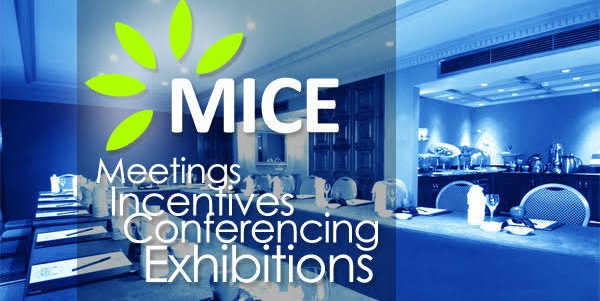
The global business landscape has changed dramatically over the last two decades. Companies no longer operate within the boundaries of a single city, state, or country — they compete, collaborate, and communicate across continents. Out of this shift has emerged one of the fastest-growing segments of the travel and hospitality industry: MICE, an acronym for Meetings, Incentives, Conferences, and Exhibitions.
MICE tourism is not leisure travel. It is purpose-driven, high-value, and closely tied to corporate strategy. A single international conference can bring together thousands of delegates, generate significant revenue for the host city, and open doors to partnerships worth millions of dollars. A single incentive trip can transform employee morale and loyalty. A single trade exhibition can put an entire industry on the global map.
For organizations to participate in this ecosystem, they need more than just flight tickets and hotel rooms. They need visas processed correctly and on time, documentation that meets embassy standards, travel itineraries that align with business schedules, and a partner who understands both the travel industry and the regulatory maze of international immigration. This is precisely where Primex Visa Pvt. Ltd., a New Delhi-based immigration and visa consultancy established in 2007, positions itself — not merely as a visa processing agency, but as a facilitator of India’s growing participation in the global MICE economy.
This article offers a comprehensive, detailed look at what MICE is, why it matters, how each of its four components functions, the visa and documentation challenges unique to business travel, and how a consultancy like Primex Visa supports individuals, corporations, and delegations moving through this ecosystem.
MICE stands for Meetings, Incentives, Conferences, and Exhibitions. It is a specialized segment of the travel and tourism industry that focuses on organizing business events, corporate gatherings, and professional networking opportunities rather than personal or leisure travel. Unlike a family holiday or a solo backpacking trip, MICE travel is almost always initiated, funded, and structured by an organization — a company, an industry body, a government department, or an event management firm.
MICE tourism blends four disciplines together:
Because it sits at the intersection of these four disciplines, MICE is often described as one of the most complex yet most lucrative categories within the broader travel and tourism industry.
Two forces have converged to make complete MICE one of the most valuable travel segments in the modern economy.
First, globalization. As companies expand across borders, they need physical spaces — whether a boardroom, a convention center, or an exhibition hall — where teams, partners, and clients from different countries can meet face-to-face. Video calls can sustain a relationship, but they rarely build the trust needed to close a major deal or launch a new market.
Second, the enduring value of in-person interaction. Despite the rise of digital communication tools, research and industry experience consistently show that face-to-face interactions remain irreplaceable for negotiation, relationship-building, brand storytelling, and complex problem-solving. A product launched at a physical exhibition creates a different kind of impact than one announced solely online. A sales team rewarded with an incentive trip forms bonds that no virtual town hall can replicate.
As a result, businesses across every sector — technology, pharmaceuticals, manufacturing, finance, education, and more — now treat MICE travel as a recurring, budgeted necessity rather than an occasional luxury.
MICE tourism is not just about corporate convenience — it is a measurable economic driver. Business travelers linked to meetings, conferences, and exhibitions typically spend significantly more per trip than average leisure tourists. They book premium hotel rooms, use business-class travel, dine at upscale restaurants, and often extend their stay to explore the host city or country.
This spending ripples outward into multiple sectors:
Cities and countries actively compete to host major MICE events precisely because of this multiplier effect. Convention bureaus, government tourism boards, and dedicated MICE infrastructure (large-scale convention centers, exhibition grounds, and integrated resort complexes) have become strategic investments for many nations, including India, which has been steadily building its MICE infrastructure in cities such as New Delhi, Mumbai, Hyderabad, and Goa.
Meetings form the foundational layer of MICE. A meeting, in the MICE context, is an organized gathering of business professionals, executives, teams, or stakeholders who come together to discuss objectives, strategies, projects, or business opportunities.
Common types of meetings include:
Why meetings matter: Well-organized meetings improve communication across teams, support better and faster decision-making, encourage collaboration between departments or partner organizations, and ultimately increase productivity. When meetings involve cross-border participants — say, a regional sales team flying in from different countries, or a multinational board convening in a single city — they cross over from a simple internal activity into the MICE travel category, requiring visas, accommodation, and logistical coordination.
For Indian companies hosting international counterparts, or Indian executives traveling abroad for board-level discussions, the visa category most relevant is typically the business visa — a short-term travel permit designed specifically for professional, non-employment activities such as meetings, negotiations, and site visits.
Incentive travel is one of the most distinctive components of MICE because its purpose is not information exchange but motivation and reward. Companies design incentive travel programs to recognize employees, business partners, or top-performing sales teams who have achieved specific goals or exceeded targets.
Common incentive travel activities include:
Why incentive travel matters: Organizations invest in incentive travel because the returns go beyond a single trip. Well-designed incentive programs improve employee motivation, increase retention rates by making high performers feel valued, boost overall morale, strengthen loyalty toward the organization, and contribute to a stronger workplace culture. Unlike a cash bonus, which is spent and forgotten, a shared travel experience creates lasting memories and often strengthens peer relationships — both of which have measurable effects on long-term engagement.
From a visa perspective, incentive travel groups present a unique challenge: dozens or even hundreds of travelers may need to be processed simultaneously, often under tight timelines dictated by corporate calendars. This is where group visa processing, bulk documentation support, and coordinated itinerary planning — services typically offered by a specialized visa consultancy — become essential to avoid delays that could disrupt an entire program.
Conferences are large-scale, structured events where professionals from a particular industry gather to exchange knowledge, discuss emerging trends, and build professional networks. They are typically organized around a central theme — a technology conference, a medical congress, an academic symposium, or an industry-specific summit.
Typical conference features include:
Why conferences matter: Conferences serve as hubs for professional development, giving attendees direct access to the latest industry insights and best practices. They facilitate knowledge sharing across organizations and even across countries, create high-value networking opportunities that can lead to partnerships or job opportunities, and offer participating brands significant visibility among a concentrated, relevant audience.
International conferences, in particular, often require careful visa planning. Speakers, delegates, and exhibitors traveling from India to attend a conference abroad — or international delegates traveling into India — must navigate specific visa categories, invitation letter requirements, and sometimes conference-specific fast-track visa arrangements offered by host countries. Missing a visa deadline can mean missing the entire event, which makes early and accurate visa processing critical for conference-goers.
Exhibitions, also known as trade shows or expos, provide businesses with a dedicated platform to showcase their products, services, innovations, and technologies to potential customers, partners, and industry stakeholders. Unlike conferences, which center on knowledge exchange, exhibitions center on display, demonstration, and direct commercial engagement.
Typical exhibition activities include:
Why exhibitions matter: Exhibitions increase brand awareness within a concentrated, highly relevant audience. They allow for direct customer engagement that digital marketing cannot replicate, open the door to new business partnerships, generate immediate sales opportunities, and support broader market expansion strategies — particularly for companies entering new geographic markets for the first time.
For Indian exporters, manufacturers, and service providers looking to participate in international trade fairs — whether in Dubai, Germany, the United States, or elsewhere — exhibition travel typically involves not just the exhibitor’s own visa but also logistics for shipping display materials, coordinating booth staff travel, and sometimes securing visas for technical personnel who will operate specialized equipment on-site.
Unlike a standard tourist visa application, MICE-related visa applications carry additional layers of complexity. Understanding these challenges explains why companies and individual professionals increasingly rely on dedicated visa consultancies rather than handling applications independently
A business visa is a temporary travel permit that allows professionals, entrepreneurs, and company representatives to visit another country for approved business-related activities — attending meetings, negotiating contracts, participating in conferences, exhibiting at trade shows, or exploring potential markets. It is distinct from a work visa (which permits employment) and a tourist visa (which is restricted to leisure activities).
Business visa applications typically require:
Each destination country has its own specific requirements, processing timelines, and documentation formats, which can change with little notice. A minor error — an outdated invitation letter format, a missing notarization, or an incomplete financial statement — can lead to delays or outright rejection, which is especially costly when the visa is tied to a fixed-date event like a conference or exhibition.
MICE travel frequently involves groups rather than individuals — a sales team flying to an incentive destination, a delegation of executives attending an overseas summit, or a team of exhibition staff traveling to set up and run a trade show booth. Group travel introduces its own set of complications:
A rejected or delayed visa in a MICE context is rarely just an inconvenience — it can mean:
This is why organizations increasingly prefer to work with an experienced visa and immigration consultancy rather than managing high-stakes, time-sensitive MICE travel documentation in-house.
Primex Visa Pvt. Ltd. is an immigration and visa consultancy headquartered in New Delhi, India, with its registered office located at B-49, 50 & 51, Somdutt Chamber-2, Bhikaji Cama Place, New Delhi. Established in 2007, the company has built its reputation over nearly two decades of operation in India’s competitive immigration services industry.
While Primex Visa is best known for its work in permanent residency (PR), study, and work visa processing for destinations such as Canada, Australia, the United Kingdom, the United States, New Zealand, and several European countries, the company’s service portfolio extends well beyond individual migration. It also supports business travelers, corporate delegations, and organizations through a dedicated business visa vertical and a specialized MICE services offering.
Primex Visa’s overall service portfolio can be grouped into several broad categories:
This breadth of service allows Primex Visa to position itself as a one-stop travel and immigration partner, capable of supporting a client from a single business trip all the way through to a long-term relocation, if their needs evolve over time.
Primex Visa describes its approach as centered on transparency, personalized guidance, and a structured, step-by-step process: profile assessment, selection of the right visa category, document preparation, application submission, and interview or pre-departure guidance. The company positions itself as working with a team of experienced consultants who tailor recommendations to each client’s specific goals, whether that client is an individual pursuing permanent residency or a company organizing travel for an entire delegation.
Recognizing that MICE tourism is a fast-growing and highly specialized niche, Primex Visa Pvt. Ltd. has developed a dedicated MICE services vertical designed to support organizations and professionals traveling for meetings, incentive trips, conferences, and exhibitions.
For clients organizing their own MICE events — whether an internal corporate meeting, an incentive trip, or participation in a larger conference or exhibition — this includes:
Since travel logistics form the backbone of any MICE program, Primex Visa’s offering includes:
For clients specifically attending or exhibiting at conferences and trade shows, Primex Visa’s support extends to:
Beyond the core logistics, Primex Visa also supports the hospitality dimension of MICE events, including:
By bundling visa assistance with these broader event, travel, and hospitality services, Primex Visa allows organizations to work with a single point of contact rather than juggling separate vendors for visas, flights, hotels, and event logistics. For a company planning a 50-person incentive trip or a delegation attending an international exhibition, this consolidated approach reduces coordination overhead and lowers the risk of miscommunication between multiple service providers — a common cause of delays in complex, multi-traveler MICE programs.
While specific requirements vary by destination country and event type, Primex Visa’s general process for supporting MICE travelers typically follows a structured path, consistent with the company’s broader immigration methodology:
Step 1: Consultation and Requirement Assessment
The process begins with an initial consultation where the consultancy gathers details about the event — its nature (meeting, incentive trip, conference, or exhibition), destination, dates, and the number of travelers involved. This helps determine the correct visa category and identify any destination-specific requirements.
Step 2: Documentation Review
Once the requirements are clear, the documentation team reviews the paperwork available — invitation letters, company registration documents, employment proofs, financial statements, and event confirmations — and identifies any gaps that need to be addressed before submission.
Step 3: Application Preparation
Applications are prepared in line with the specific embassy or consulate’s format and requirements. For group travel, this step includes ensuring consistency across all applicants’ documentation to avoid discrepancies that could trigger additional scrutiny.
Step 4: Submission and Tracking
Applications are submitted to the relevant embassy, consulate, or visa processing center, with the consultancy tracking progress and responding to any additional document requests as they arise.
Step 5: Approval, Ticketing, and Pre-Departure Support
Once visas are approved, the process moves into final logistics — flight ticketing, travel document organization, and pre-departure briefings covering entry requirements, local customs, and any event-specific instructions.
Step 6: On-Ground and Post-Event Support
For larger MICE programs, ongoing support may continue through the event itself, with assistance available for any last-minute travel adjustments, and can extend to post-event logistics such as return travel coordination.
India’s Growing Position in the Global MICE Market
India has steadily strengthened its position as both a source and destination market for MICE tourism. Cities such as New Delhi, Mumbai, Hyderabad, Bengaluru, and Goa have invested in convention centers, five-star hospitality infrastructure, and improved international connectivity to attract global conferences and exhibitions. At the same time, a growing base of Indian corporations, exporters, and professionals increasingly travel abroad for meetings, incentive trips, conferences, and trade fairs as the country’s economy becomes more globally integrated.
Economic Contribution
MICE tourism contributes to economic growth in ways that extend well beyond the immediate event:
Business Benefits Beyond Economics
For the companies and professionals who participate, MICE travel delivers benefits that go beyond direct revenue:
Organizations that choose to work with a professional MICE-focused visa consultancy such as Primex Visa Pvt. Ltd., rather than managing travel and documentation independently, typically realize several advantages:
Cost-Effective Planning
A consultancy familiar with multiple destinations and vendor networks can often secure better rates on travel, accommodation, and event services than an individual company negotiating on its own, while also helping avoid costly last-minute changes caused by documentation errors.
Time Savings
Coordinating visas, flights, accommodation, and event logistics for even a small delegation can consume significant internal resources. Outsourcing this process to a dedicated consultancy frees up internal teams to focus on the substance of the event — the meeting agenda, the conference presentation, or the exhibition strategy — rather than the logistics behind it.
Professional Execution
Experienced consultants understand the nuances of different visa categories and destination-specific requirements, reducing the likelihood of documentation errors that could delay or derail an application.
Risk Management
Group travel, tight event deadlines, and varying embassy requirements all introduce risk. A professional partner helps identify and mitigate these risks early, rather than discovering problems close to departure.
Better Attendee Experience
When logistics run smoothly — visas approved on time, flights and hotels well-coordinated, and on-ground support available — attendees can focus fully on the purpose of their trip, whether that’s closing a deal, absorbing new industry knowledge, or enjoying a well-earned incentive reward.
Higher Event ROI
Ultimately, seamless logistics translate into a better return on investment for the organization funding the trip. A delegation that arrives on time, fully prepared, and free of travel-related stress is far more likely to achieve the business objectives that justified the expense in the first place.
To illustrate how these pieces fit together in practice, consider a few representative scenarios common in the MICE industry:
Scenario 1 — Corporate Delegation Attending an International Summit: A mid-sized Indian technology firm is invited to send a five-person delegation to an industry summit in Europe. Each traveler requires a business visa supported by an invitation letter from the summit organizers, proof of company registration, and individual travel itineraries. A visa consultancy coordinates document collection across all five travelers, ensures consistency in the paperwork, and submits applications with enough lead time to accommodate potential embassy delays — critical given the fixed summit dates.
Scenario 2 — Sales Team Incentive Trip: A company rewards its top-performing regional sales team with an incentive trip abroad. Because the group includes employees at different seniority levels, documentation needs vary slightly, but the trip dates are fixed around a company calendar. Group visa processing, synchronized flight and hotel bookings, and pre-departure briefings ensure the entire team travels together without last-minute complications.
Scenario 3 — Exhibitor at an International Trade Fair: An Indian manufacturing company plans to exhibit at a trade fair abroad to showcase its products to international buyers. Beyond the exhibitor’s own business visa, the company needs support coordinating booth staff travel, technical personnel visas, and logistics for shipping display materials — all while working against the fixed dates of the trade fair calendar.
In each of these cases, the core challenge is the same: aligning time-sensitive visa and documentation requirements with an unmovable business event date, across potentially multiple travelers with varying documentation profiles. This is the operational reality that a MICE-focused visa consultancy is built to manage.
The MICE industry does not stand still, and any organization planning long-term participation in it benefits from understanding where the sector is heading.
Hybrid and Blended Events
Many conferences and large meetings now combine an in-person core with a livestreamed or digital component, allowing organizers to reach a wider audience while still preserving the relationship-building value of physical attendance. For travelers, this often means smaller, more focused delegations attending in person, with visa and travel planning becoming more targeted around key decision-makers or presenters rather than entire teams.
Sustainability-Conscious Planning
Corporate travel policies increasingly weigh the environmental footprint of large-scale MICE events. This has led to more consolidated itineraries, fewer but more impactful trips, and growing interest in destinations with strong sustainability credentials — all of which affects how travel and visa timelines are planned.
Rise of Tier-2 and Tier-3 MICE Destinations
While established hubs remain popular, a growing number of conferences, incentive programs, and exhibitions are being hosted in emerging destinations offering lower costs, unique experiences, and improving infrastructure. This diversification means visa consultancies must maintain expertise across a wider range of countries and entry requirements than in the past.
Technology-Driven Event Management
Digital registration platforms, mobile event apps, and data-driven attendee tracking have become standard at major conferences and exhibitions. On the travel side, this is mirrored by increasing digitization of visa applications, e-visas, and online documentation submission — trends that reward consultancies capable of managing both digital and traditional application processes smoothly.
Personalization of Incentive Travel
Rather than one-size-fits-all reward trips, companies increasingly offer employees a choice of destinations or experience types within an incentive program. This personalization adds complexity to travel and visa planning, since a single incentive “trip” may in practice involve multiple destinations and multiple visa categories within one program.
Stricter and More Dynamic Visa Regulations
Immigration policies across major destinations continue to evolve, with some countries tightening business visa requirements while others introduce streamlined, event-specific visa arrangements to attract MICE business. Staying current with these frequent changes is one of the most valuable functions a specialized consultancy performs on behalf of its clients.
Clients choose a MICE partner to gain clarity, coordination and dependable support. Primex Visa combines travel planning with best experience in visa and documentation processes, which is especially valuable for international delegations. Our service is designed around the programme rather than a generic tour package.
We focus on clear scope, realistic advice and participant-friendly communication. Options are assessed in relation to purpose, schedule and budget. Documentation requirements are addressed early. Changes and dependencies are discussed openly. The client receives a central point for agreed services, reducing the administrative burden on internal teams. Our Visa team provides Step-by-Step process and update you complete information to every clients and provide successful rate for visa.
Our goal is to help the organisation create an experience that feels professional from the first communication to the final transfer. We understand that a MICE programme carries the company’s reputation, and we treat details accordingly.

You can reach us at our office at
Regd. Address: B-49, 50 & 51, Somdutt Chamber-2, Bhikaji Cama Place, New Delhi – 110066
Office Timings: Monday to Saturday (10 A.M. to 5 P.M.)
Contact number: +91-9911225019, 9911225091
You can also write to us at info@primexvisa.com