In today’s interconnected economy, business opportunities are no longer limited by geographical boundaries. Entrepreneurs, investors, senior executives, company representatives and professionals frequently need to travel internationally to attend meetings, negotiate contracts, explore investments, participate in exhibitions or establish valuable commercial relationships. A Business Visa is designed to facilitate these legitimate short-term business activities while allowing travellers to enter a foreign country in accordance with its immigration laws.
At Primex Visa, we understand that business travel is often time-sensitive and document-intensive. A delayed application, incomplete supporting document or unclear travel purpose can affect an important meeting, conference or commercial opportunity. Our experienced team offers professional Business Visa assistance, helping applicants understand the requirements, organise their documentation and submit a well-prepared application based on the rules of their intended destination.
Whether you are planning to explore a new market, meet an overseas client, attend an international trade fair or represent your organisation abroad, Primex Visa can support you throughout the application process.
A Business Visa is a temporary travel authorisation that permits an eligible foreign national to visit another country for approved business-related purposes. Depending on the destination, it may be issued as a sticker visa, electronic visa, travel authorisation or another form of short-term entry permission.
A Business Visa generally allows the holder to participate in professional or commercial activities without entering the destination country’s regular labour market. It is different from a Work Visa. A Business Visa may permit you to attend meetings or negotiate a contract, but it normally does not permit you to accept local employment, receive a salary from an employer in the host country or perform productive work that requires employment authorisation.
The exact permitted activities, duration of stay, validity period and number of entries depend on the immigration regulations of the country issuing the visa. Applicants should therefore understand the specific conditions attached to their visa before travelling.
A Business Visa may be suitable for a wide range of applicants, including:
Business owners and entrepreneurs
Company directors and senior managers
Employees travelling on behalf of their organisation
Investors exploring commercial opportunities
Exporters, importers and international traders
Sales and marketing professionals
Consultants and technical specialists attending business discussions
Representatives attending conferences, seminars or exhibitions
Professionals participating in corporate training or industry events
Start-up founders meeting partners, investors or service providers
Eligibility is not based only on job title. The applicant must normally demonstrate a genuine business purpose, sufficient financial resources, appropriate travel arrangements and a clear intention to comply with the conditions of the visa and leave the country before the authorised stay expires.
Although the permitted activities vary by country, a Business Visa is commonly used for:
Attending meetings with clients, suppliers or business partners
Negotiating or signing contracts and commercial agreements
Participating in trade fairs, exhibitions and industry conferences
Exploring investment, franchise or partnership opportunities
Conducting market research and feasibility discussions
Visiting company branches, factories or corporate offices
Attending board meetings or shareholder meetings
Receiving short-term training or attending corporate workshops
Meeting legal, financial, banking or professional advisers
Discussing the purchase or sale of goods and services
Developing international business networks
Inspecting products, equipment or facilities connected with a commercial transaction
Some countries impose detailed restrictions even within these categories. For example, attending a meeting may be allowed while directly delivering services to a local customer may require separate work authorisation. Applicants should never assume that every professional activity is covered by a Business Visa.
The difference between a Business Visa and a Work Visa is important. A Business Visa is generally intended for temporary visits involving meetings, negotiations, events and other non-employment commercial activities. A Work Visa or employment permit is normally required when a person will take up a job, receive local remuneration, provide ongoing services or perform productive work for an organisation in the destination country.
Using the wrong visa category may result in refusal, cancellation at the border or future immigration complications. Before applying, travellers should clearly identify what they will do during the visit, who will pay them, how long the activity will last and whether the host organisation will benefit from hands-on work. Primex Visa helps applicants assess the proposed purpose of travel and understand which category may be more appropriate, subject to the destination country’s official rules.

Business Visa categories differ across countries, but they are often classified by validity, duration and number of permitted entries.
A single-entry visa generally allows the traveller to enter the destination country once during the visa’s validity. After the traveller leaves, the visa usually cannot be used again, even if some validity remains.
A multiple-entry visa may allow repeated visits during its validity, subject to the maximum permitted stay on each visit and any cumulative stay restrictions. It can be useful for applicants who regularly attend meetings, exhibitions or negotiations abroad. However, multiple-entry approval is discretionary and may depend on travel history, demonstrated need and the applicant’s overall circumstances.
This category is generally intended for brief commercial visits. The permitted stay may range from a few days to several weeks or months, depending on the country.
Certain countries offer an online application process for eligible nationalities and approved business purposes. An electronic visa can simplify submission, but applicants must still satisfy all eligibility, documentation and entry requirements.
Requirements vary, but a Business Visa applicant will usually need to establish the following:
Genuine Purpose of Travel
The business reason for the visit should be specific, credible and supported by evidence. The application should clearly explain the activity, proposed dates, organisations involved and expected outcome of the trip.
Valid Passport
The passport must ordinarily remain valid for the minimum period required by the destination country and contain sufficient blank pages where applicable.
Invitation or Supporting Business Evidence
An invitation from the overseas company, conference organiser, exhibition authority or business partner can be an important document. It should clearly state the applicant’s identity, purpose of visit, intended dates, relationship between the parties and responsibility for expenses, where relevant.
Financial Capacity
The applicant or sponsoring organisation may need to show sufficient funds for airfare, accommodation, daily expenses and other travel costs. Bank statements, income records, company financial documents or a sponsorship letter may be requested.
Strong Ties to the Home Country
Applicants may be expected to demonstrate professional, financial, family or social ties that support their intention to return. Examples can include employment, business ownership, property, dependent family members and ongoing commercial responsibilities.
Good Immigration and Travel History
Previous compliance with visa conditions may strengthen an application. Any past refusal, overstay or immigration issue should be disclosed honestly where requested and addressed with appropriate documents.
Health, Character and Insurance Requirements
Depending on the country and length of stay, an applicant may need medical insurance, health examinations, vaccination records, police certificates or other declarations.
The precise checklist depends on the applicant’s profile and destination. Common documents may include:
Valid passport and previous passports, if requested
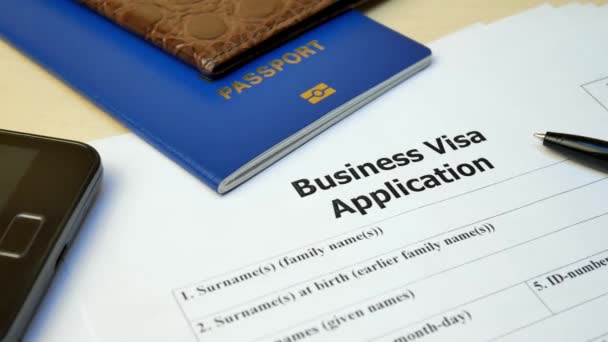
Completed visa application form
Recent photographs meeting the required specifications
Personal covering letter explaining the proposed trip
Invitation letter from the overseas business or event organiser
Letter from the applicant’s employer authorising the visit
Company registration or incorporation documents
Proof of business ownership, partnership or directorship
Employment letter, salary slips and employee identity documents
Personal and business bank statements
Income-tax returns or other financial evidence
Confirmed or proposed travel itinerary
Accommodation details
Return flight reservation, where appropriate
Conference, seminar or exhibition registration
Evidence of previous dealings between the companies
Contracts, correspondence, purchase orders or meeting schedules
Travel medical insurance, where mandatory
Proof of family, employment or economic ties to the home country
Additional documents may be required following an application review or visa interview. All information should be consistent across the form, supporting documents and statements made during any interview.
1. Initial Profile and Purpose Assessment
The first step is to understand the traveller’s nationality, destination, business purpose, intended duration, funding arrangement and travel history. This helps identify the relevant visa category and likely requirements.
2. Documentation Planning
A personalised checklist can then be prepared. Business Visa applications often involve documents from both the applicant and the inviting organisation, so early coordination is important.
3. Application Form and Supporting Letters
The visa form, covering letter, employer letter and invitation letter should present a clear and consistent explanation. Dates, company names, addresses, financial responsibility and proposed activities must align across the application.
4. Appointment, Biometrics or Online Submission
Depending on the destination, the applicant may need to submit the application online, visit a visa application centre, provide fingerprints and a photograph, or attend an embassy or consular appointment.
5. Visa Interview, If Required
During an interview, the applicant may be asked about the host company, business relationship, travel plans, funding and intention to return. Answers should be truthful, concise and supported by the submitted documents.
6. Decision and Passport Collection
Processing times vary and may be affected by the destination, nationality, season, security checks, application complexity and additional document requests. Applicants should avoid making non-refundable arrangements until the visa has been granted and its conditions have been checked.
A visa is never guaranteed. Common concerns that may contribute to refusal include:
An unclear or poorly documented purpose of travel
Inconsistencies between the form, letters and interview answers
An invitation letter that lacks important details
Insufficient evidence of funds or questionable transactions
Weak evidence of business, employment or family ties
Applying under a Business Visa for activities that appear to be employment
Incomplete, outdated or improperly formatted documents
Doubts about the credibility of the applicant or inviting company
Previous immigration violations or undisclosed refusals
Passport, insurance or eligibility requirements not being met
A refusal does not always mean that future travel is impossible. The refusal reasons should be reviewed carefully before considering a new application, reconsideration or appeal where such options are legally available.
A strong application tells one coherent story. The purpose of travel should be commercially reasonable, the dates should match the planned activities, and the financial evidence should show how the visit will be funded. Applicants should submit relevant documents rather than overwhelming the decision-maker with unrelated paperwork.
It is also helpful to explain the relationship between the applicant’s organisation and the overseas host. If the businesses have communicated previously, supporting emails, contracts, invoices or meeting agendas may help establish credibility. Business owners should provide evidence that their enterprise is active and that they have valid reasons to return. Employees should generally include an employer letter confirming their designation, purpose of travel, approved leave and expected return to work.
Applicants must never provide false information, altered documents or misleading statements. Misrepresentation can lead to refusal and, in some jurisdictions, a ban on future applications.
A properly planned business visit can provide valuable opportunities to:
Enter new international markets
Build direct relationships with clients and suppliers
Explore investments and joint ventures
Understand overseas customer needs
Attend global industry events and discover new technology
Strengthen brand visibility and professional credibility
Negotiate more effectively through face-to-face communication
Identify distribution, sourcing and franchise opportunities
Exchange knowledge and develop strategic partnerships
Although a Business Visa is temporary, the professional connections created during the visit can support long-term commercial growth.
Every Business Visa application is assessed according to the applicant’s individual circumstances. Two people travelling to the same event may require different supporting evidence because their occupations, sources of income, business relationships and travel histories are different. Preparing documents according to the applicant’s real profile is therefore more effective than relying on a generic checklist.
Business Owners and Entrepreneurs
Business owners should normally demonstrate that their enterprise is genuine, operational and financially active. Useful evidence may include a certificate of incorporation or registration, tax records, company bank statements, invoices, contracts, office records, employee information and proof of the applicant’s ownership or directorship. The application should explain how the overseas visit relates to the company’s existing operations or future plans.
If an entrepreneur intends to meet potential distributors, inspect machinery, negotiate a franchise or explore a joint venture, the supporting documents should explain the commercial background and expected purpose of each meeting. A clear business profile can help show why the applicant needs to travel and why they are likely to return to continue managing their enterprise.
Salaried Employees and Company Representatives
An employee travelling on behalf of an organisation may need an official letter confirming their designation, length of employment, salary, approved leave, purpose of the assignment and expected date of return. The employer should explain why that particular employee has been selected for the trip and whether the company will cover the expenses.
Where the visit involves a group delegation, each employee must still satisfy the individual requirements. A group invitation or company sponsorship does not automatically remove the need for personal documentation, financial evidence or proof of immigration compliance.
Investors and Senior Executives
Investors and senior executives may travel to review potential projects, attend board meetings, evaluate acquisitions or meet professional advisers. Their applications may require evidence of investment capacity, business background, source of funds and the proposed transaction. However, a short-term Business Visa should not be confused with an Investor Visa, entrepreneur residence programme or immigration-by-investment route. If the intention is to establish long-term residence or actively operate a business overseas, a different immigration category may be required.
Self-Employed Professionals and Consultants
Consultants and self-employed applicants should clearly distinguish between attending business discussions and delivering paid services. Evidence of professional registration, client contracts, tax returns, invoices and ongoing assignments in the home country may be useful. If the traveller intends to perform technical work, install equipment, train local staff or deliver a project, the destination’s authorities may classify the activity as work even when the visit is short.
Start-Up Founders
Start-up founders may have limited company history, particularly when the enterprise is newly incorporated. In such cases, a detailed business plan, funding records, investor correspondence, accelerator participation, product information, partnership discussions and founder credentials can help explain the purpose of the journey. The evidence should remain realistic and should not exaggerate revenue, investment commitments or business relationships.
The invitation letter is often one of the central documents in a Business Visa application. It should come from a legitimate host organisation and should be issued by a person authorised to communicate on its behalf. A strong invitation usually identifies the applicant, explains the relationship between the parties and describes the reason for the proposed visit.
Depending on the destination, an invitation letter may include:
The full name, passport details and position of the visitor
The host company’s legal name, address and registration information
The name and contact details of the authorised signatory
The nature and history of the business relationship
The exact purpose and proposed dates of the visit
A meeting schedule, conference details or planned commercial activities
The location of meetings and intended accommodation
Confirmation of who will pay for travel and living expenses
A statement that the visitor will comply with immigration conditions
Supporting registration, identification or sponsorship documents where required
The invitation should not use vague language such as “business visit” without providing context. At the same time, it should not claim that the visitor will undertake employment if the application is being made under a short-term Business Visa category. Information in the invitation must match the applicant’s covering letter, employer letter, travel itinerary and application form.
Some countries require a prescribed invitation form, notarisation, legalisation, government approval or proof of the host company’s status. Applicants should follow the exact format required by the relevant authority rather than relying only on an informal company letter.
A covering letter gives the applicant an opportunity to present the application in a clear and logical manner. It should not merely repeat the application form. Instead, it should connect the supporting documents and explain the reason for travel in language that is factual, concise and easy to verify.
A well-prepared covering letter may address:
The applicant’s professional background and current position
The name and nature of the applicant’s business or employer
The reason the overseas visit is necessary
The identity of the inviting company or event organiser
Proposed travel dates and a brief day-by-day plan
The source of funds for the journey
Accommodation and transportation arrangements
Previous international travel, where relevant
Reasons the applicant will return to the home country
A list of important documents included with the application
The language should be professional and truthful. Applicants should avoid emotional appeals, unsupported claims and copied templates containing facts that do not match their circumstances. If there is an unusual issue—such as a recent large bank deposit, a previous visa refusal, a newly established company or a gap in employment—it may be appropriate to provide a brief explanation supported by evidence.
Visa authorities commonly examine whether the applicant has sufficient and credible financial resources for the proposed visit. The objective is not simply to show a high closing balance. Decision-makers may also consider account history, regular income, business turnover, the source of recent deposits, expected travel costs and whether the financial position is consistent with the applicant’s profile.
Where the applicant is paying personally, financial evidence may include personal bank statements, tax returns, salary slips, investment records and proof of other regular income. A business owner may also provide company financial records, but personal and corporate funds should be clearly distinguished.
Where the employer is paying, the organisation may provide a sponsorship or expense letter together with company bank statements, registration documents and evidence of the applicant’s employment. Where the overseas host is covering some or all costs, the invitation should clearly state the expenses being covered and may need to be supported by the host’s financial or corporate documents.
Sudden unexplained transfers made shortly before submission can create concerns. If a legitimate large transaction appears in an account, evidence such as a sale agreement, investment redemption, bonus letter or business invoice may help explain it. Applicants should never temporarily borrow money simply to create a misleading balance.
A Business Visa itinerary should be practical and consistent with the stated commercial objective. It does not always need to include paid, non-refundable bookings, but it should normally identify intended arrival and departure dates, cities to be visited, meeting locations, accommodation and any internal travel.
For a conference or exhibition, the itinerary may include registration dates, event schedules and networking sessions. For a series of business meetings, it can identify each host organisation, address, contact person and proposed agenda. When multiple countries are involved, applicants should confirm which country is responsible for processing the visa and whether separate entry permissions are necessary.
The duration of the trip should be proportionate to its purpose. An unexplained stay of several weeks for a single one-day meeting may raise questions. Conversely, an itinerary that is unrealistically compressed may appear unreliable. Any tourism planned alongside the business activity should be disclosed where the form or authority requires it.
Applicants should also check passport validity, transit requirements, local registration rules, insurance coverage and entry conditions. A Business Visa for the final destination does not necessarily permit transit through every connecting country.
Many countries require applicants to attend a visa application centre or diplomatic mission to provide fingerprints and a photograph. Previous biometrics may remain valid for a defined period in some jurisdictions, while others require a new appointment for each application or visa category.
An interview may be scheduled to verify the applicant’s identity, travel purpose, finances and intention to leave after the visit. Common questions can include:
What is the purpose of your trip?
Who invited you and how do you know the host organisation?
What business activities will you undertake?
Who will pay for your airfare, hotel and daily expenses?
How long will you stay?
What is your role in your company?
Why is your physical presence necessary?
Have you travelled abroad previously?
Do you have relatives or associates in the destination country?
What responsibilities require you to return home?
Applicants should answer in their own words and remain consistent with the application. Memorised or overly rehearsed responses can be less persuasive than accurate, straightforward explanations. Supporting documents should be organised so that the applicant can locate them quickly if requested.
International conferences, exhibitions and trade fairs enable companies to present products, learn about industry developments and connect with potential customers. Applicants travelling for such events should normally provide registration confirmation, payment receipts, event details, exhibitor or delegate passes and information about the organiser.
If the applicant will operate a booth, display samples or conduct demonstrations, it is important to confirm whether those activities are permitted. Commercial samples and equipment may also be subject to customs declarations, temporary import rules or taxes that are separate from the visa process.
An event registration alone may not be enough to establish eligibility. The application should explain how the event is relevant to the applicant’s profession or business. Evidence of the company’s activities, the applicant’s role and any scheduled meetings at the event can make the purpose clearer.
Applicants should be cautious about unverified event invitations and fraudulent conference organisers. Visa authorities may check whether an event is genuine, whether fees have been paid and whether the applicant’s background relates to the event’s subject.
Business travellers frequently need to meet overseas clients, inspect facilities, discuss supply arrangements or negotiate agreements. Supporting evidence can include email correspondence, contracts, purchase orders, meeting agendas, product catalogues and records of previous transactions.
For a first-time commercial relationship, the application can explain how the parties connected and what they intend to discuss. For an established relationship, invoices, shipment records or earlier agreements may demonstrate continuity. Confidential commercial information can sometimes be redacted, but enough detail should remain to establish credibility.
Site visits require particular care because the line between observation and productive work can be narrow. Touring a facility or inspecting goods may be permitted, while repairing equipment, supervising construction or performing installations may require work authorisation. The proposed activity should be described accurately so that the correct visa category can be determined.
There is no single worldwide Business Visa. Each destination establishes its own eligibility rules, permitted activities, evidence standards and application procedures. The following overview is general and should not replace current official guidance.
Schengen Area Business Travel
A short-stay Schengen visa may permit eligible business visitors to travel within participating European countries for approved activities for a limited period. Applicants generally apply through the country connected most closely with their main destination or longest stay, subject to official rules. Invitation documents, travel insurance, accommodation, funds and proof of return are commonly relevant. A short-stay visa does not automatically authorise employment.
United Kingdom Business Visits
The United Kingdom permits certain business activities under its visitor framework, while employment and many forms of service delivery require another route. Applicants should identify the precise activity and confirm that it appears within the current permitted visitor activities.
United States Business Travel
Eligible business travellers may use a visitor classification intended for temporary business activities, while some nationalities may qualify for travel under a separate visa-waiver system. Admission decisions and the authorised period of stay are made under applicable United States rules. Travellers should not use a business visitor route to take up local employment.
Canada Business Visits
Canada distinguishes business visitors from individuals entering the Canadian labour market. The source of remuneration, principal place of business and nature of the proposed activity may be relevant. Some travellers require a visitor visa, while others may require an electronic travel authorisation, depending on nationality and method of travel.
Australia and New Zealand
Australia and New Zealand provide visitor or business-visitor options for specified activities such as meetings, conferences and negotiations. Eligibility, online application procedures and conditions vary according to nationality and purpose.
Asia and the Middle East
Business Visa systems across Asian and Middle Eastern countries differ significantly. Some destinations offer electronic visas or visas on arrival to eligible nationalities, while others require a local sponsor, host-company approval or pre-authorised invitation. Travellers should also review local commercial, customs and cultural requirements.
Rules can change without notice. Before applying or travelling, always check the official immigration website of the destination and any transit country.
These three terms are related but not identical. Visa validity is the period during which the visa may be used to seek entry. Duration of stay is the amount of time the visitor may remain after entry. Number of entries indicates whether the visa can be used once, twice or multiple times.
For example, a multiple-entry visa valid for one year does not necessarily permit the holder to remain continuously for one year. Each visit may be limited to a much shorter period, and cumulative limits may apply. Border authorities may grant a shorter stay than the maximum indicated by the visa.
Travellers should record their arrival and required departure dates carefully. Overstaying, working without permission or using repeated visits to live in the country can lead to cancellation, removal, fines or difficulty with future applications. A visa extension is not automatic and may be available only in exceptional or qualifying circumstances.
Approval is an important step, but preparation should continue before departure. Applicants should review the visa label or electronic approval and confirm that their name, passport number, validity dates, category and number of entries are correct. Any apparent error should be reported through the official process before travel.
Business travellers should carry relevant supporting documents, which may include the invitation, meeting agenda, accommodation confirmation, return itinerary, financial evidence and host contact details. Border officers may ask questions similar to those raised during the application process.
While abroad, visitors must observe the conditions of their permission. They should restrict their activities to those authorised, maintain valid insurance where required and depart on time. If the business plan changes significantly—for example, if the host offers employment—the traveller should obtain advice on the correct immigration procedure rather than beginning unauthorised work.
A refusal should be read carefully. The decision letter may identify concerns about finances, purpose of travel, credibility, documentation, immigration history or intention to leave. The most appropriate response depends on the country and the reason for refusal.
Possible options may include submitting a fresh application with stronger evidence, requesting administrative review, seeking reconsideration or filing an appeal where the law permits. Reapplying immediately with the same documents is unlikely to resolve the underlying concern. A new application should address each relevant refusal point directly without hiding the previous decision.
Applicants should retain copies of the form and all supporting documents. Future applications may ask about past refusals, and accurate disclosure is essential. A previous refusal does not always prevent approval, but misleading answers about immigration history can create a more serious issue than the original refusal.
The applicant is not the only party involved in a business visit. Employers and overseas host companies should ensure that the invitation, sponsorship and planned activities comply with local immigration rules. They should avoid describing a visitor as a business guest while expecting them to undertake duties that require a work permit.
The sending employer should maintain accurate records, approve realistic travel dates and clearly define who will pay expenses. The host should provide verifiable contact information and be prepared to confirm the meeting or event if contacted by immigration authorities. Where local sponsorship registration, notification or work authorisation is required, the host should complete those obligations before the visitor travels.
Companies arranging frequent international travel may benefit from internal policies covering visa assessment, document retention, travel insurance, tax considerations, data protection and employee safety. Immigration approval does not automatically resolve customs, taxation, professional licensing or employment-law requirements.
Before submitting an application, review the following points:
Confirm the exact purpose and permitted activities
Select the correct visa or entry category
Check passport validity and blank-page requirements
Obtain a detailed and verifiable invitation
Prepare employer, company and financial documents
Ensure all dates and facts are consistent
Explain the funding and sponsorship arrangement
Prepare a realistic itinerary and accommodation plan
Check insurance, biometrics and interview requirements
Review transit-visa and customs obligations
Disclose previous refusals or immigration issues honestly
Avoid non-refundable bookings before a decision where possible
Check the granted visa and entry conditions before departure
Carry supporting documents while travelling
Leave the destination before the authorised stay expires
Careful preparation cannot guarantee approval, but it can reduce avoidable errors and help the decision-maker understand the application.
At Primex Visa, our approach begins with understanding the applicant rather than simply collecting standard documents. We review the proposed destination, business purpose, professional background, financial arrangement and previous travel history. Based on the information available, our team explains the likely documentation and procedural requirements.
We can assist with organising forms, covering letters, employer documents, invitation requirements, financial evidence and appointment preparation. Where an interview may be required, we help applicants understand the types of questions commonly associated with their profile. We also encourage applicants to review every statement before submission because they remain responsible for the truth and accuracy of the application.
Our assistance is designed to make a complex process more manageable. We do not issue visas, influence government decisions or provide guaranteed approvals. The embassy, consulate or immigration authority independently assesses every application according to applicable law and policy.
Business Visa applications require accuracy, planning and a clear understanding of the proposed travel. Primex Visa provides professional assistance focused on making the process organised and transparent.
Our support may include:
Initial assessment of your profile and travel purpose
Guidance on the appropriate visa category
A customised document checklist
Review of application forms and supporting documents
Assistance with covering letters and document presentation
Guidance regarding invitation and sponsorship documentation
Support with appointment and submission procedures
Interview preparation, where applicable
Application-status guidance and post-decision support
Our role is to help applicants prepare complete and credible applications. Final decisions, processing times, visa validity and entry permission remain entirely with the relevant embassy, consulate, immigration authority and border officials.
International business travel can open doors to new markets, partnerships and investment opportunities, but a successful visa application begins with the correct category and carefully prepared documentation. Primex Visa is committed to providing reliable, professional and personalised assistance at every stage of your Business Visa journey.
If you are planning to attend an overseas meeting, trade exhibition, corporate event, conference or investment discussion, speak with our team for an initial consultation.
Call/WhatsApp: +91 9911225091
Email: info@primexvisa.com
Website: www.primexvisa.com
Disclaimer: Visa rules, document requirements, fees, processing times and permitted activities vary by country and may change without notice. Information on this page is general and does not constitute legal

You can reach us at our office at
Regd. Address: B-49, 50 & 51, Somdutt Chamber-2, Bhikaji Cama Place, New Delhi – 110066
Office Timings: Monday to Saturday (10 A.M. to 5 P.M.)
Contact number: +91-9911225019, 9911225091
You can also write to us at info@primexvisa.com
Frequently Asked Questions
Generally, a Business Visa does not permit regular employment or paid productive work in the destination country. If your proposed activity involves working for a local employer or providing hands-on services, you may require a Work Visa or permit.
Many destinations require or strongly expect an invitation letter, but the exact requirement depends on the visa category and country. The letter should contain complete and verifiable information
Validity can range from a short single visit to a longer multiple-entry period. Visa validity is different from the length of stay allowed on each visit, so both must be checked carefully.
Family members may need to submit separate visitor or dependent applications. Their eligibility and documents will depend on the destination and purpose of travel.
There is no universal amount. The required funds depend on the duration of the visit, destination, accommodation, airfare, sponsorship arrangement and the applicant’s circumstances. Financial documents should show genuine and explainable funds.
Apply as early as permitted by the destination country, particularly if you must attend a fixed-date exhibition, meeting or conference. Processing times can change, and additional checks may cause delays.
No. A visa allows you to travel to a port of entry and request admission. Final entry is normally determined by border authorities after reviewing your documents and travel purpose.